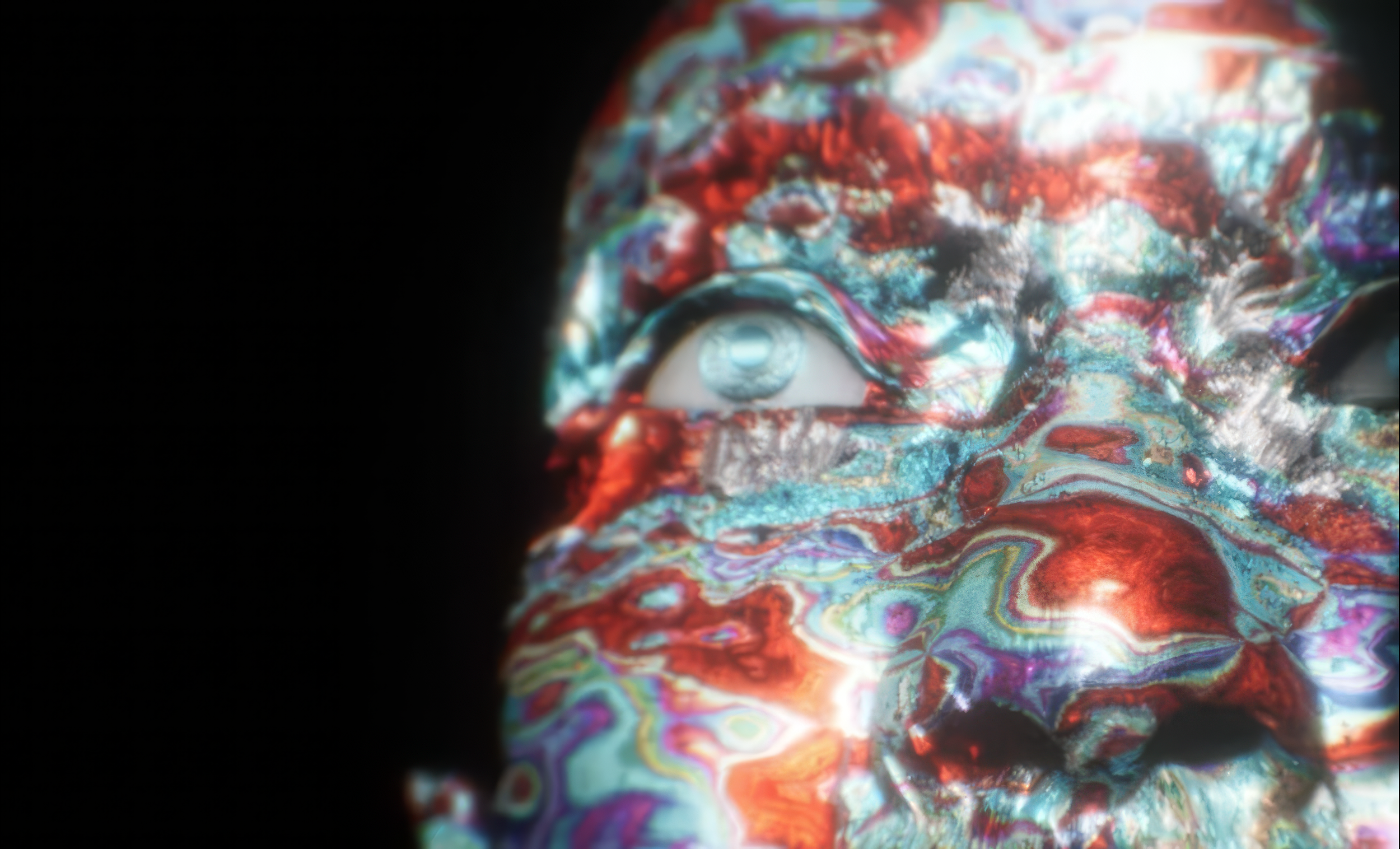
Between Empty: Dome
Dome experience | Interactive Installation
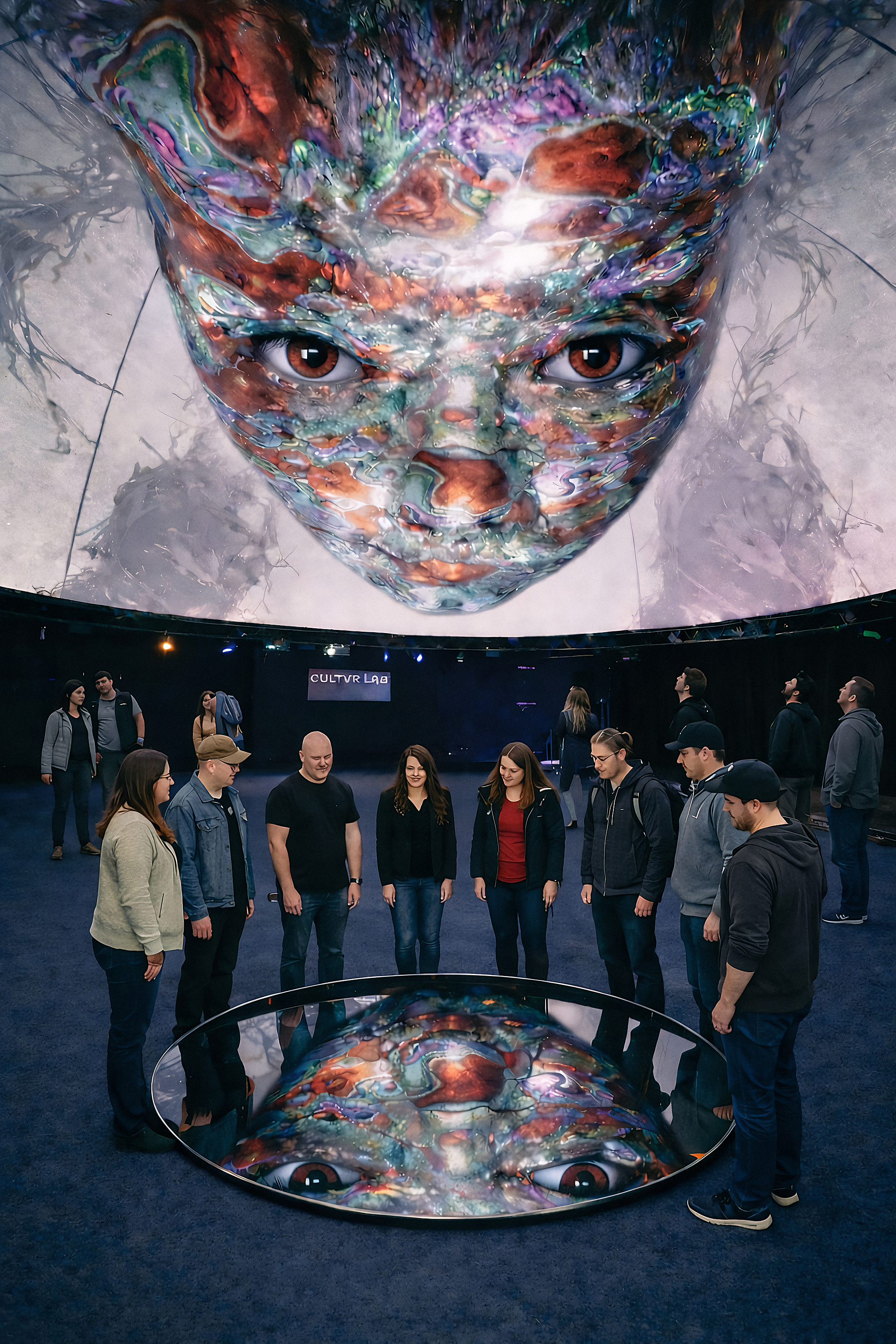
This project expands my narrative game Between Empty into a dome-based interactive installation. Using an existing dream-sequence face asset and self-review shader mechanic from the game, the work is activated by audience gaze into a floor mirror. The face becomes visible, reviews itself, and is gradually overwritten by external patterns from the dome’s periphery, exploring how identity depends on—and is distorted by—others’ attention.
Original Project Website:
https://www.heqiuyao.com/work-4/between-empty-narrative-game
Original Game Trailer
Dream-sequence
Primarily using dream-sequence and facial assets, featuring an interactive system that reveals an additional texture layer on the face through a custom reveal shader.
Dome Installation Overview
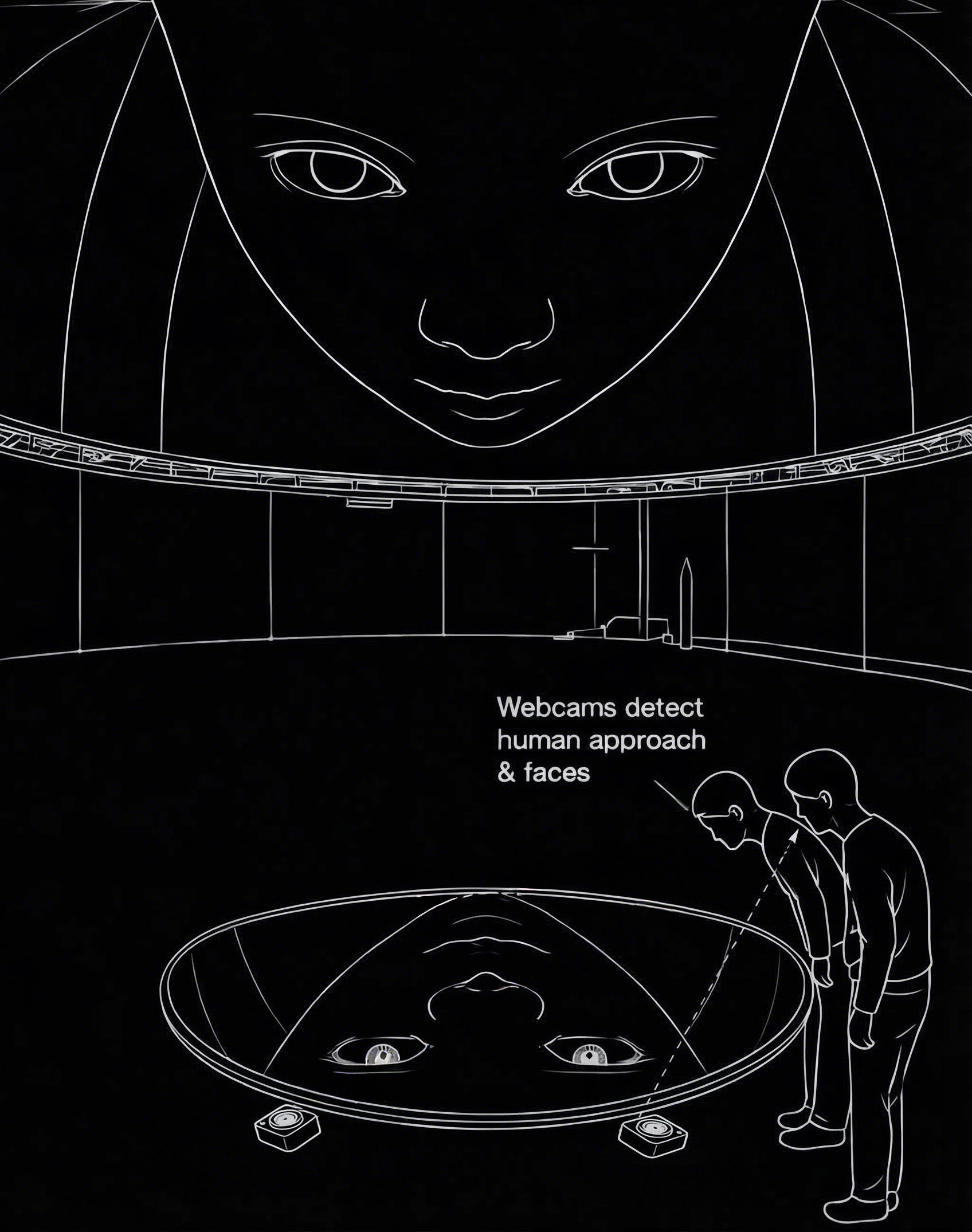
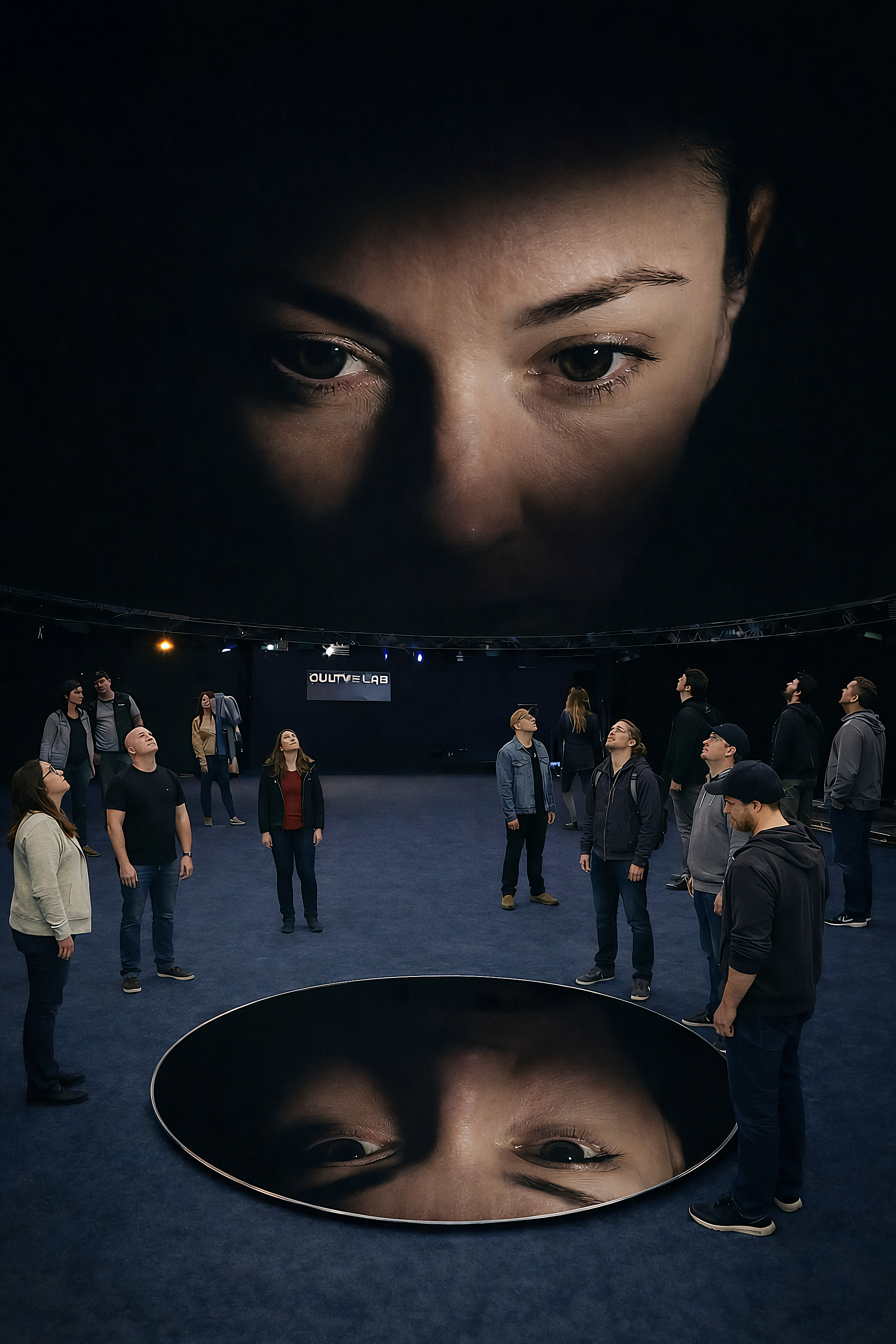
This project is an extension of my narrative game Between Empty, translating part of its world language into a dome-based interactive installation. The work continues the game’s theme—how identity is shaped by external influence and emotional dependency—while shifting the experience from player-controlled gameplay to a collective, gaze-driven situation.
I will build on existing components from Between Empty: a rigged face model with completed skeleton/animation setup, a self-review shader system developed for a dream level, and a set of visual assets from the game’s world. The residency period focuses on adapting and expanding these materials into a spatial installation format—developing new visual layers, producing new narration and voice recordings, and refining a robust interactive structure suitable for dome.
The physical setup is minimal but precise. A circular mirror lies flat on the floor beneath the dome. From the audience’s point of view, the face above appears to be gazing downward into the mirror—as if the character is watching itself. The mirror is not meant to reflect the visitor; it is staged as the character’s own mirror, an interface for self-observation. When viewers step in and look into this mirror, their presence becomes an intervention in the character’s self-view, shifting what “self-review” becomes under external attention.
A small camera (webcam) mounted on or near the mirror is used to detect audience presence and approximate the number of faces/gazes gathered around it. This data drives the installation’s behavior in real time.
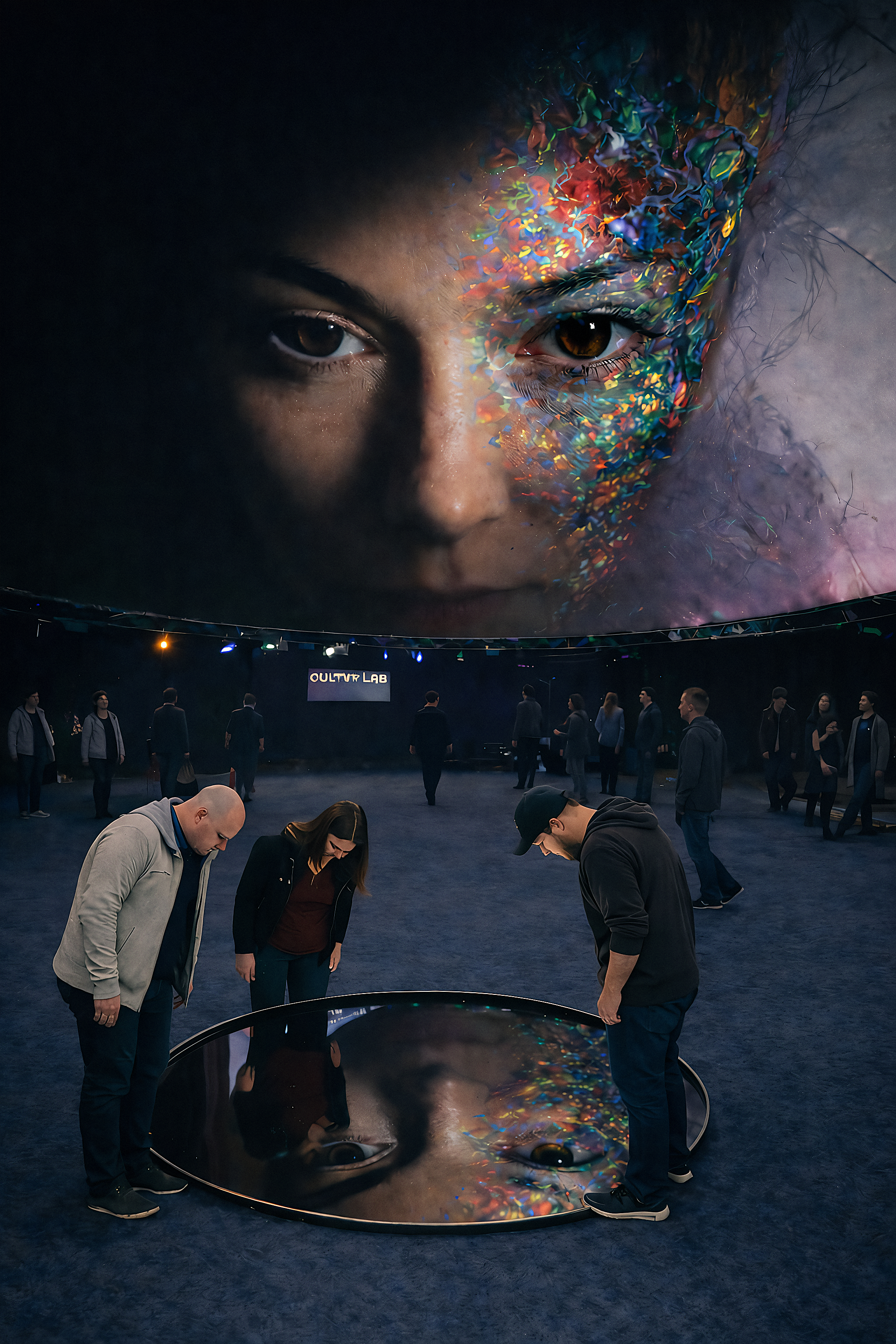
The dome experience operates through four recurring states that can loop indefinitely and be interrupted at any time. In the initial idle state, only the character’s eyes are visible in both dome and mirror, suggesting a condition of being unable to clearly perceive the self. Fragmented memories surface through voice and fleeting images that feel personal. When a small number of viewers look into the mirror, the face gradually emerges and begins a self-review process on its surface—controlled patterns appear as the character attempts to describe and confirm itself through being seen. As collective gaze increases, textures first appear along the dome’s periphery and advance inward, invading and overwriting the face in layered, fragmenting waves; the voice becomes interrupted and contradictory as self-judgment destabilizes. When attention disappears, the system returns to an idle condition, but traces remain as visual and sonic glitches—brief flashes of pattern or fragments of speech.
This project explores interaction as a narrative system rather than a standalone device. Audience participation is central to the work, actively driving how the experience unfolds over time, while the system continues to operate and loop even in the absence of direct engagement. The installation is designed to be portable, with a minimal physical setup.

Source Visual from Original Project


